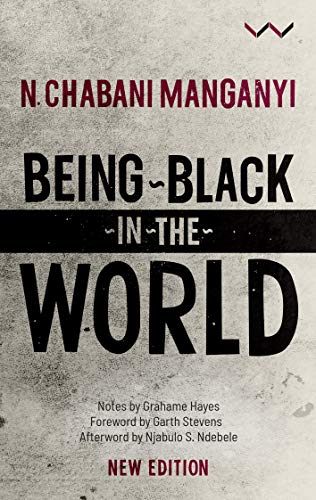
An annotated edition of a classic text by South Africa's first black psychologist, a collection of essays reflecting on what it meant to be black during the apartheid years
Being-Black-in-the-World, one of N. Chabani Manganyi�s first publications, was written in 1973 at a time of global socio-political change and renewed resistance to the brutality of apartheid rule and the emergence of Black Consciousness in the mid-1960s. Manganyi is one of South Africa�s most eminent intellectuals and an astute social and political observer. He has written widely on subjects relating to ethno-psychiatry, autobiography, black artists and race. In 2018 Manganyi�s memoir,Apartheid and the Making of a Black Psychologistwas awarded the prestigious ASSAf (The Academy of Science of South Africa) Humanities Book Award. Publication ofBeing-Black-in-the-Worldwas delayed until the young Manganyi had left the country to study at Yale University. His publishers feared that the apartheid censorship board and security forces would prohibit him from leaving the country, and perhaps even incarcerate him, for being a �radical revolutionary�. The book found a limited public circulation in South Africa due to this censorship and original copies were hard to come by.
This new edition is an invitation to a younger generation of citizens to engage with early decolonialising thought by an eminent South African intellectual. While the essays in this book are clearly situated in the material and social conditions of that time, they also have a timelessness that speaks to our contemporary concerns regarding black subjectivity, affectivity and corporeality, the persistence of a racial (and racist) order and the possibilities of a renewed de-colonial project. Each of these short essays can be read as self-contained reflections on what it meant to be black during the apartheid years. Manganyi is a master of understatement, and yet this does not stop him from making