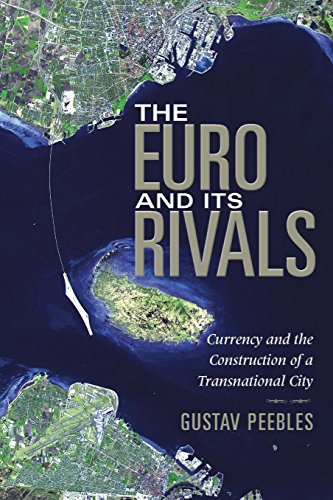
Gustav Peebles takes an anthropological look at two seemingly separate developments in Europe at the turn of the millennium: the rollout of the euro and the building of new transnational regions such as the Oresund Region, envisioned as a melding of Copenhagen, Denmark, with Malm?, Sweden. Peebles argues that the drive to create such transnational spaces is inseparable from the drive to create a pan-national currency. He studies the practices and rhetoric surrounding the national currencies of Denmark and Sweden, the euro, and several new local currencies struggling to come into being.The Euro and Its Rivalsprovides a deep historical study of the welfare state and the monetary policies and utopian visions that helped to ground it, at the same time shedding new light on the contemporary movement of goods, people, credit, and debt.
US
[This book] . . . is an ethnographic study arguing that a bridge connecting Malm?, Sweden, and Copenhagen, Denmark, has similar cultural effects as a common European currency. Peebles (anthropology, The New School), who lived in Malm? during the construction of the ?resund Bridge, is primarily concerned with boundaries of inclusion and exclusion. He simplifies the world by defining several visions of the ideal, or what he calls utopian visions, and argues that proponents of the bridge had similar utopian visions as those who favored the euro. Both wanted to alter people's sense of identity from being part of a nation to being part of a transnational group. He draws similar parallels between those who opposed the bridge and those who advocated local currency rings, which he treats with more respect than most economists would give them. Along the way he ties in attitudes toward debt and bankruptcy, vagrancy, and immigration. Issues central to Peebles's discussion are ignored by economists, while issues that interest economists are not addressed in this work. Summing Up: Recommended. Upper-division undergraduate through fac