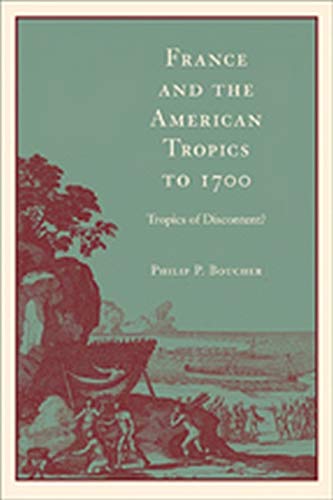
Traditionally, the story of the Greater Caribbean has been dominated by the narrative of Iberian hegemony, British colonization, the plantation regime, and the Haitian Revolution of the eighteenth century. Relatively little is known about the society and culture of this region�and particularly France's role in them�in the two centuries prior to the rise of the plantation complex of the eighteenth century. Here, historian Philip P. Boucher offers the first comprehensive account of colonization and French society in the Caribbean.
Boucher's analysis contrasts the structure and character of the French colonies with that of other colonial empires. Describing the geography, topography, climate, and flora and fauna of the region, Boucher recreates the tropical environment in which colonists and indigenous peoples interacted. He then examines the lives and activities of the region's inhabitants�the indigenous Island Caribs, landowning settlers, indentured servants, African slaves, and people of mixed blood, the gens de couleur. He argues that the sixteenth and seventeenth centuries were not merely a prelude to the classic plantation regime model. Rather, they were an era presenting a variety of possible outcomes. This original narrative demonstrates that the transition to sugar and the plantation complex was more gradual in the French properties than generally depicted�and that it was not inevitable.
- Used Book in Good Condition