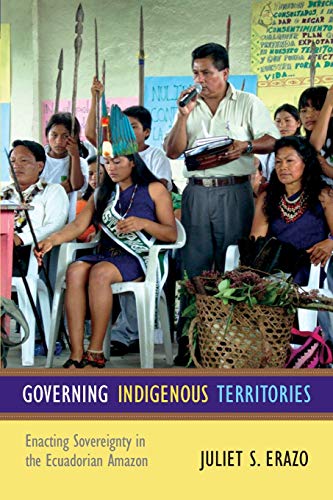
Governing Indigenous Territoriesilluminates a paradox of modern indigenous lives. In recent decades, native peoples from Alaska to Cameroon have sought and gained legal title to significant areas of land, not as individuals or families but as large, collective organizations. Obtaining these collective titles represents an enormous accomplishment; it also creates dramatic changes. Once an indigenous territory is legally established, other governments and organizations expect it to act as a unified political entity, making decisions on behalf of its population and managing those living within its borders. A territorial government must mediate between outsiders and a not-always-united population within a context of constantly shifting global development priorities. The people of Rukullakta, a large indigenous territory in Ecuador, have struggled to enact sovereignty since the late 1960s. Drawing broadly applicable lessons from their experiences of self-rule, Juliet S. Erazo shows how collective titling produces new expectations, obligations, and subjectivities within indigenous territories.
US
An ethnography showing that collective land titling for native peoples is both an enormous accomplishment and a source of new expectations, obligations, and subjectivities within the legally established indigenous territories.
Juliet S. Erazo is Assistant Professor of Anthropology at Florida International University.
"Governing Indigenous Territoriesis a beautiful ethnography, a compelling contribution to contemporary debates about sovereignty in Latin America. The story that Juliet S. Erazo tells is about not just Ecuador or Latin America but larger political, economic, social, and ecological histories, practices, and ideologies. This is contemporary ethnography at its best."—Paige West, author ofFrom Modern Production to Imagined Primitive: The Social World of Coffee from Papua New Guinea