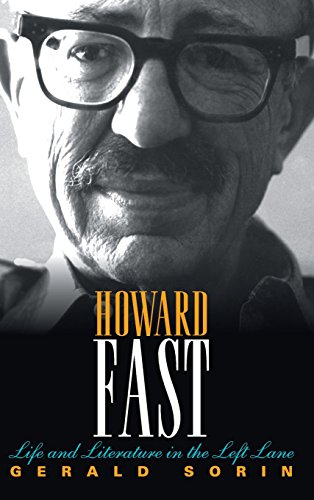
Howard Fast's life, from a rough-and-tumble Jewish New York street kid to the rich and famous author of close to 100 books, rivals the Horatio Alger myth. Author of bestsellers such asCitizen Tom Paine,Freedom Road,My Glorious Brothers, andSpartacus, Fast joined the American Communist Party in 1943 and remained a loyal member until 1957, despite being imprisoned for contempt of Congress. Gerald Sorin illuminates the connections among Fast's Jewishness, his writings, and his left-wing politics and explains Fast's attraction to the Party and the reasons he stayed in it as long as he did. Recounting the story of his private and public life with its adventure and risk, love and pain, struggle, failure, and success, Sorin also addresses questions such as the relationship between modern Jewish identity and radical movements, the consequences of political myopia, and the complex interaction of art, popular culture, and politics in 20th-century America.
US
The life and times of a bestselling writer and one-time Communist
Gerald Sorin is Distinguished Professor Emeritus of American and Jewish Studies at the State University of New York at New Paltz. He is author ofIrving Howe: A Life of Passionate Dissent, winner of the 2003 National Jewish Book Award in History andThe Prophetic Minority: American Jewish Immigrant Radicals, 1880-1920(IUP, 1985).
Acknowledgments
Introduction
1 Paradise Postponed
Publish or Perish
Politics Delayed
2 The War Against Fascism
The Fatal Embrace
The Reds and the Blacks
3 The Life of the Party
Innocent Abroad
The Road Not Taken
The Politics of Literature
4 Cold War, Hot Seat
The Discouraged American
Down and Out in the USA
5 Banned, Barred, and Beseiged
It Can't Happen Here
War and Peace
6 The Myopia of American Communism
Foley Square Follies
Waltzing at the Waldorf
April in Paris
The Poison of