Notes: Brand New Item. Not shipped to AK, HI, APO, FPO, AE.
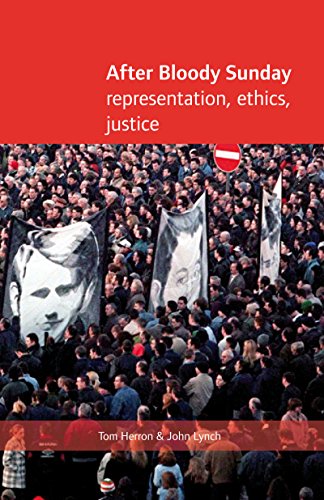
After Bloody Sunday investigates the ways in which the events in Derry on January 30, 1972, have found representation in photography, film, theatre, poetry, television documentary, art installations, murals, music, commemorative events, legal discourse, eyewitness testimony, and pressure-group campaigns.
Thirty-six years after the killing and wounding of twenty-six civil rights protestors in Derry, the new independent tribunal chaired by Lord Mark Saville of Newdigate is close to publishing its findings. The Report of the Bloody Sunday Inquiry promises to be the most comprehensive act of truth-recovery yet attempted in relation to the many atrocities that scarred the North of Ireland during the three decades of political conflict. Mark Saville has the formidable, and perhaps impossible, task of establishing the definitive truth of Bloody Sunday. His attempt comes in the wake of many other earlier versions of the events of 30th January 1972 that have also claimed to present the truth of what happened that day.
After Bloody Sunday examines the portrayals of the events of January 30th, 1972, and its devastating repercussions in photography, film, theatre, poetry, television documentary, art installations, murals, commemorative events, and legal discourse. The authors consider their veracity, their mechanisms of authenticity, and their assumptions that a particular medium???be it film, or language, or visual art???can somehow articulate the truth of Bloody Sunday.
In the course of six thematically-organized chapters, the authors analyze productions ranging from high-profile popular forms of entertainment???such as Paul Greengrass???s feature film Bloody Sunday and Jimmy McGovern???s made-for-television film, Sunday???through to lesser-known treatments in poetry (Thomas Kinsella???s Butcher???s Dozen), drama (Frank McGuinness???s Carthaginians and Brian Friel???s The Freedom of the City), and visual art (The Bo