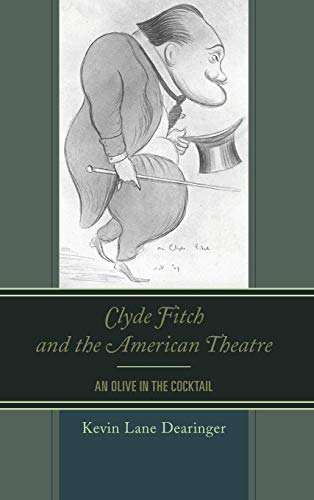
Clyde Fitch (1865-1909) was the most successful and prolific dramatist of his time, producing nearly sixty plays in a twenty-year career. He wrote witty comedies, chaotic farces, homespun dramas, star vehicles, historical works, stark melodramas, and adaptations of European successes, but he was best known for his society plays, mirroring themes found in the novels of Henry James and Edith Wharton. In fact, Fitch collaborated with Wharton on a stage adaptation of her House ofMirth. He was also a gay man, although that gentler adjective was not the term of his time. He was bullied in school and baited by critics throughout his career for what they supposed of his private life. He responded with impressive strength and integrity. He was, at least for a short time, Oscar Wildes lover, and Wilde influenced his early plays, but Fitchs study of Ibsen and other European dramatists inspired him to pursue the course of naturalism. As he became more successful, he took greater control of the staging and design of his plays. He was a complete man of the theatre and among the first names enrolled in New Yorks theatrical hall of fame.Kevin Lane Dearinger is a teacher, actor, and author of The Bard in the Bluegrass: Two Hundred Years of Shakespearean Performance in Lexington, Kentucky (2007), Marie Prescott: A Star of Some Brilliance (2009), and the play Regarding Mrs. Carter, the American Bernhardt.In Clyde Fitch and the American Theatre: An Olive in the Cocktail, Kevin Lane Dearinger meticulously details the life and works of a prolific dramatist whose name and plays are not currently known, but who was the first American to be taken seriously as a playwright&. [T]he information in this book is bounteous and the subject almost forgotten, so this book is a valuable record of a highly interesting figure in the American theatre.
EDGEAcknowledgments
Prologue
Act One: Inciting Incident
Chapter One: Not so delicate, my dear, as you think.
Chapter Two