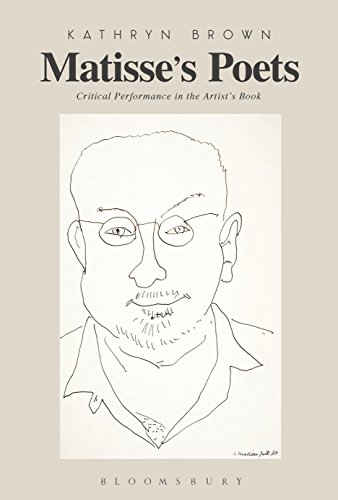
Throughout his career, Henri Matisse used imagery as a means of engaging critically with poetry and prose by a diverse range of authors. Kathryn Brown offers a groundbreaking account of Matisse's position in the literary cross-currents of 20th-century France and explores ways in which reading influenced the artist's work in a range of media. This study argues that the
livre d'artistebecame the privileged means by which Matisse enfolded literature into his own idiom and demonstrated the centrality of his aesthetic to modernist debates about authorship and creativity. By tracing the compositional and interpretive choices that Matisse made as a painter, print maker, and reader in the field of book production, this study offers a new theoretical account of visual art's capacity to function as a form of literary criticism and extends debates about the gendering of 20th-century bibliophilia. Brown also demonstrates the importance of Matisse's self-placement in relation to the French literary canon in the charged political climate of the Second World War and its aftermath. Through a combination of archival resources, art history, and literary criticism, this study offers a new interpretation of Matisse's artist's books and will be of interest to art historians, literary scholars, and researchers in book history and modernism.
Kathryn Brownis Lecturer in Art History at Loughborough University, UK. She is the author of
Women Readers in French Painting 1870�1890(2012).
�This beautiful book will become both a reference work on Matisse's works and a reflection on the critical function of the dialogue of images and text.� �French Studies (Bloomsbury Translation)
�It is [...] extremely rare to find a scholar able to move so expertly between literary and visual analysis, and this remains a tremendously impressive and useful contribution to scholarship on Matisse and his literary and artistic networks, on bibliophile culture, and on text-image rela