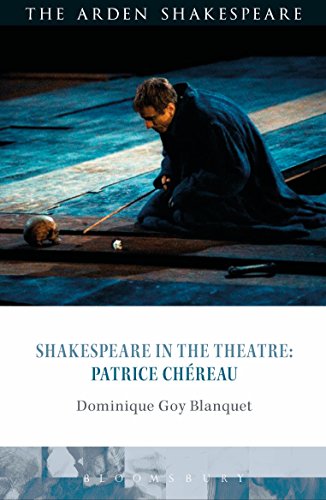
Patrice Ch?reau (1944 - 2013) was one of France's leading directors in the theatre and on film and a major influence on Shakespearean performance. He is internationally known for memorable productions of both drama and opera. His life-long companionship with Shakespeare began in 1970 when his innovativeRichard IImade the young director famous overnight and caused his translator to denounce him publicly as an iconoclast, for a production mixing �music-hall, circus, and pankration�. After this break, Ch?reau read Shakespeare's texts assiduously, �line by line and word by word�, with another renowned poet, Yves Bonnefoy.
Drawing on new interviews with many of Chereau's collaborators, this study explores a unique theatre maker's interpretations of Shakespeare in relation to the European tradition and to his wider body of work on stage and film, to establish his profound influence on other producers of Shakespeare.
Dominique Goy-Blanquetis professor of Elizabethan Theatre at the University of Picardie, a member of the editorial board of
La Quinzaine Litt?raireand a contributor to
The Times Literary Supplement. Her works include
Shakespeare's Early History Plays: From Chronicle to Stage(2003),
Shakespeare et l'invention de l'histoire(2004),
Joan of Arc, A Saint for All Reasons: Studies in myth and politics(2003) and the French translation of and W. H. Auden's
Lectures on Shakespeare(2003).
�A compendium of fascinating production detail and a compellingly argued history of a crucial period of European theatre in which Chereau played a leading role & Goy-Blanquet's critical exegesis is detailed and illuminating.� �SKEN? Journal of Theatre and Drama Studies
�As with Shakespeare, Ch?reau's space is always metaphorized (like the scenic treatment of the phantom in his Hamlet), and he gives the text its true value and the fable its faithful rhythm. The question of theater determines his vision, and hislƒÀ