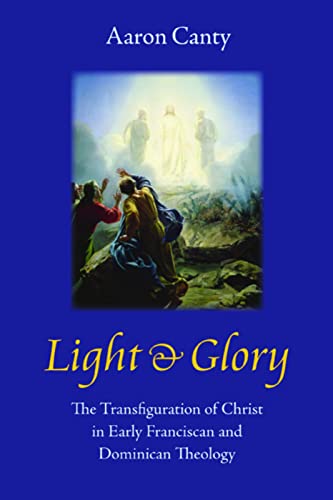
The story of Jesus's transfiguration, as recorded in the synoptic gospels, has proved to be a fruitful source of theological reflection since the time of the Early Church. Although Christ's luminous and glorious transformation is the central event, the transfiguration story possesses a number of other interesting facets, including the role of the Trinitarian Persons, the transformation of the disciples, and the presence of Moses and Elijah. The story also raises a number of Christological issues, including the relationship between Christ's divinity and humanity and the nature of His body before and after His resurrection. The narrative placement of this event before Christ's passion, death, and resurrection invites reflection on soteriological and eschatological themes as well. This fairly brief episode in Christ's life thus unites a number of closely related themes in a short, dense, and very rich narrative.
Light and Glory offers an engaging comparison of the teachings of seven thirteenth-century theologians -- three Franciscans and four Dominicans -- on the subject of the transfiguration of Christ. The Franciscan authors discussed are Alexander of Hales, John of La Rochelle, and Bonaventure. The Dominicans examined are Hugh of St. Cher, Guerric of St. Quentin, Albert the Great, and, finally, Thomas Aquinas. Given the roughly chronological nature of the book's discussion, the influence of earlier writers in the group is shown on the later writers. Development within a particular author's understanding of the transfiguration is noted, as well as the influence of each author's thought on others.
Through their teachings and writings, these seven theologians created a profound scholastic expression of what Christ's transfiguration was and what it meant for Christians in their day.
ABOUT THE AUTHOR:
Aaron Canty is associate professor of religious studies at Saint Xavier University.
PRAISE FOR THE