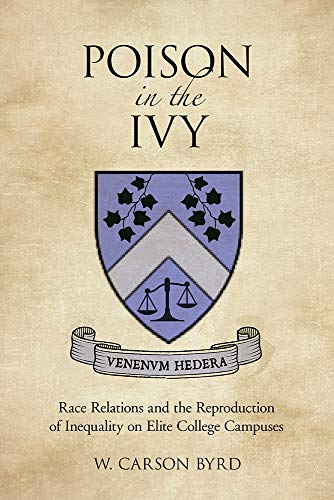
The world of elite campuses is one of rarified social circles, as well as prestigious educational opportunities. W. Carson Byrd studied twenty-eight of the most selective colleges and universities in the United States to see whether elite students’ social interactions with each other might influence their racial beliefs in a positive way, since many of these graduates will eventually hold leadership positions in society. He found that students at these universities believed in the success of the ‘best and the brightest,’ leading them to situate differences in race and status around issues of merit and individual effort.
Poison in the Ivychallenges popular beliefs about the importance of cross-racial interactions as an antidote to racism in the increasingly diverse United States. He shows that it is the context and framing of such interactions on college campuses that plays an important role in shaping students’ beliefs about race and inequality in everyday life for the future political and professional leaders of the nation.Poison in the Ivyis an eye-opening look at race on elite college campuses, and offers lessons for anyone involved in modern American higher education.
Poison in the Ivyexamines college students in the U.S.’s upper-echelon of higher education to identify how young elites interact with one another, how these social interactions influence their views of race and inequality, and how these views and interactions may contribute to broader racial inequalities in society.
W. CARSON BYRD is an assistant professor of pan-African studies at the University of Louisville in Kentucky.
Preface xi
1 Easing into Views of Race and Inequality in Everyday
Life on Campus 1
2 Life before College: Factors Influencing Early Views of
Race and Inequality 23
3 Mixing It Up on Campus: Patterns of and Influences on