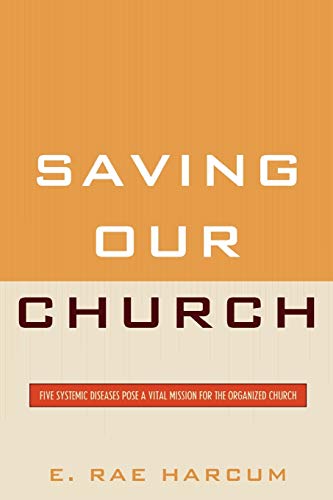
InSaving Our Church,the author argues that systemic diseases, which can infect and degrade any organization, are particularly virulent in the church because they are not recognized and therefore not treated. Many church members, called Churchians by the author, are more interested in earthly treasures of church membership than in serving God and their neighbors. Churchians are likely to control all levels of church governance. As a result, churches are converted into loveless social clubs that abuse dissident members and threaten the very life of the organized church. The author provides evidence for these claims through published accounts and two recent case histories.
The book places major blame on the clergy, especially those in higher church governance, and states that the Churchians must be fought by recognizing their goals and methods, courageously confronting them, and healing their abuses by restoring and strengthening love in our church.
E. Rae Harcum,Ph.D., is a professional psychologist who taught at the college level for many years. Harcum has written extensively on the subject of psychology, authoring many journal articles and book chapters as well as five books. He has also written a book about religion and is a longtime member of a Protestant denomination.
�It has been my pleasure to read carefully the manuscript by E. Rae Harcum entitledSaving Our Church.As a retired minister, having served fifty years in the United Methodist Church, how I wish it had been available and required reading early in my ministry.� �Rev. Milford C. Rollins, retired, United Methodist Church, Poquoson, VA.
�A thoughtful, thought-provoking study of political processes in and beyond the local church. Within a theological context, Professor Harcum presents two case studies that illustrate the continuing struggle in every church between what Reinhold Niebuhr identified as the will to love and the will to power. � �Vinson Sutlive, pro