MISCHA HONECK is an assistant professor at the Heidelberg Center for American Studies.
Widely remembered as a time of heated debate over the westward expansion of slavery, the 1850s in the United States was also a period of mass immigration. As the sectional conflict escalated, discontented Europeans came in record numbers, further dividing the young republic over issues of race, nationality, and citizenship. The arrival of German-speaking �Forty-Eighters,� refugees of the failed European revolutions of 1848–49, fueled apprehensions about the nation’s future. Reaching America did not end the foreign revolutionaries’ pursuit of freedom; it merely transplanted it.
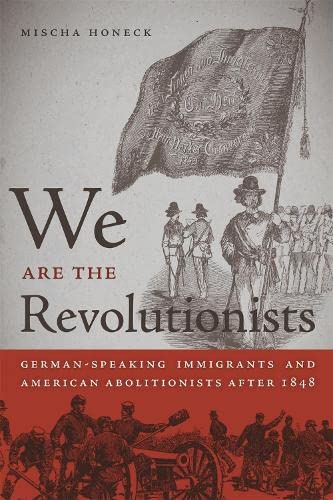
In We Are the Revolutionists, Mischa Honeck offers a fresh appraisal of these exiled democrats by probing their relationship to another group of beleaguered agitators: America’s abolitionists. Honeck details how individuals from both camps joined forces in the long, dangerous battle to overthrow slavery. In Texas and in cities like Milwaukee, Cincinnati, and Boston this cooperation helped them find new sources of belonging in an Atlantic world unsettled by massive migration and revolutionary unrest.
Employing previously untapped sources to write the experience of radical German émigrés into the abolitionist struggle, Honeck elucidates how these interethnic encounters affected conversations over slavery and emancipation in the United States and abroad. Forty-Eighters and abolitionists, Honeck argues, made creative use not only of their partnerships but also of their disagreements to redefine notions of freedom, equality, and humanity in a transatlantic age of racial construction and nation making.
Extraordinarily well researched . . . Honeck argues persuasively that these Forty-Eighters drew upon Enlightenment ideology to champion equality and racial reform by challenging privilege and hierarch