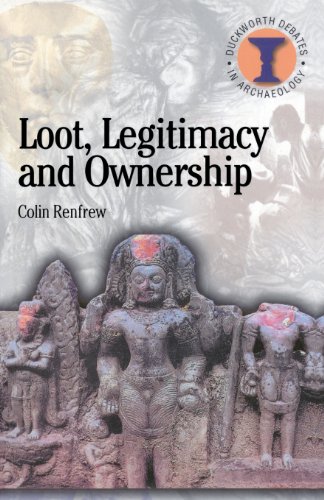
Colin Renfrew argues that what is most precious in archaeology is the information that excavations can shed on our human past. Yet the clandestine and unpublished digging of archaeological sites for gain - looting - is destroying the context in which archaeological findings can be understood, as well as sabotaging the most valuable information. It is the source of most of the antiquities that appear on the art market today - unprovenanced antiquities, the product of illicit traffic financed, knowingly or not by the collectors and museums that buy them on a no-questions-asked basis. This trade has turned London as well as other international centres into a 'thieves kitchen' where greed triumphs over serious appreciation of the past. Unless a solution is found to this ethical crisis in archaeology, Renfrew argues that our record of the past will be vastly diminished, and his book lays bare the misunderstanding and hypocrisy that underlies that crisis.
Archaeology is being undermined by clandestine and unpublished digging of archaeological sites for gain. Unless a solution is found to this ethical crisis, our record of the past will be vastly diminished. This book attempts to lay bare the misunderstanding and hypocrisy that underlies that crisis.
Colin Renfrewwas formerly Disney Professor of Archaeology and Director of the McDonald Institute for Archaeology, University of cambridge, UK, where he is now Senior Fellow. His publications include
Figuring It Out: Parallel Visions of Artists and Archaeologists(2003);
Excavations at Phylakopi in Melos, 1974-77, and
Prehistory: the Making of the Human Mind(both 2007).
List of illustrations
Introduction
1. The destruction of the past
2. Unprovenanced antiquities: the role of the private collector and dealer
3. Causes for concern: illegitimate acquisition and reluctant restitution
4. A universal problem: Asia, Africa, America
5. Ineffective safeguards and evolving morali