Notes: Brand New Item. Not shipped to AK, HI, APO, FPO, AE.
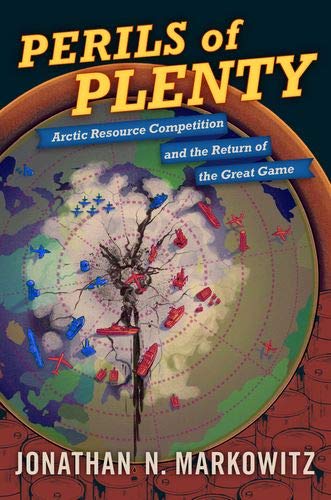
Climate change is rapidly melting Arctic ice unlocking natural resources in contestable areas. This disruption has led to warnings of a return of the Great Game in which states scramble to project power to the ends of the earth to engage in militarized resource competition. Which states will have the strongest interest in securing control over these resources and will they pursue these interests by projecting military force? InPerils of Plenty, Jonathan N. Markowitz answers this question and sheds light on the prospects for the future of resource competition in the Arctic and beyond from the deserts of the Middle East to the tropic of the South China Sea.Among scholars who focus on the politics of natural resources, conventional wisdom asserts that resource-scarce states have the strongest interest in securing control over resources. Counterintuitively, however, inPerils of Plenty, Jonathan N. Markowitz finds that the opposite is true. In actuality, what states make influences what they want to take. Specifically, Markowitz argues that the more economically dependent states are on resource extraction rents for income, the stronger their preferences will be to secure control over resources. He tests the theory with a set of case studies that analyze how states reacted to the 2007 exogenous climate shock that exposed energy resources in the Arctic. Given the dangerous potential for conflict escalation in the Middle East and the South China Sea and the continued shrinkage of the polar ice cap, this book speaks to a genuinely important development in world politics that will have implications for understanding the political effects of climate change for many years to come.Chapter 1: IntroductionChapter 2: A Theory of State Preferences and Resource CompetitionChapter 3: Research Design: The Arctic as a Natural LaboratoryChapter 4: Descriptive Statistics and Cross: National Comparisons of Arctic Power ProjectionChapter 5: Russia the Rent-Seeking Revision