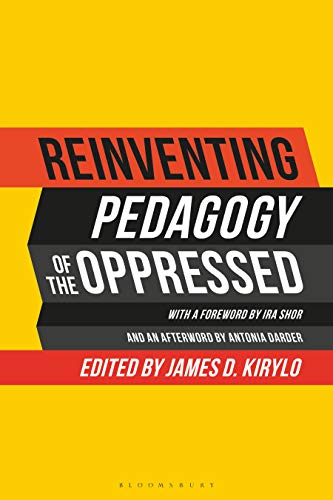
Since its publication in 1968 Paulo Freire's
Pedagogy of the Oppressedhas maintained its relevance well into the 21st century. This book showcases the multitude of ways in which Freire's most celebrated work is being reinvented by contemporary, educators, activists, teachers, and researchers. The chapters cover topics such as: spirituality, teacher identity and education, critical race theory, post-truth, academic tenure, prison education, LGBTQ educators, critical pedagogy, posthumanism and indigenous education. There are also chapters which explore Freire's work in relation to W.E.B Du Bois, Myles Horton, Martin Luther King, Jr., and Simone de Beauvoir. Written by leading first and second-generation Freirean scholars, the book includes a foreword by Ira Shor and an afterword by Antonia Darder.
James D. Kirylois Professor of Education at the University of South Carolina, USA. Among other books, he is author (with Drick Boyd) of
Paulo Freire: His Faith, Spirituality, and Theology(2017),
Teaching with Purpose: An Inquiry into the Who, Why, and How We Teach(2016) and
Paulo Freire: The Man from Recife(2011).
�I would recommend this book as a must-have for teacher educators to reflect and explore alternative models of teacher education as well as teachers and educational researchers committed to critical theory and literacies as it provides an excellent overview of the world through a Freirean lens and within different settings.� �Educational Review
�At a time of growing authoritarian movements across the globe, the work of Paulo Freire stands out as a prescient beacon of struggle and hope.Reinventing Pedagogy of the Oppressed: Contemporary Critical Perspectivesbuilds on that political ideal and memory of resistance and in doing so brilliantly reinvents and extends Freire work by engaging it from a variety of disciplines, studies, and emancipatory concerns. In this book, theory and practice emerge in a fresh and origi