Notes: Brand New Item. Not shipped to AK, HI, APO, FPO, AE.
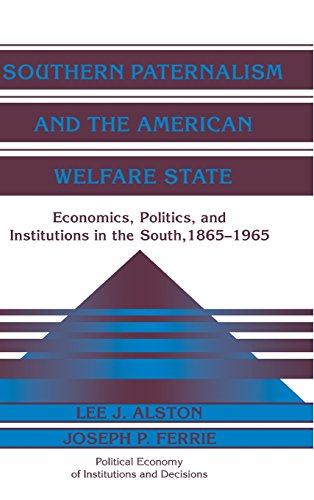
This book shows how paternalism in Southern agriculture helped shape the growth of the welfare state.Combining insights from economics, political science, an history, Professors Alston and Ferrie show how the timing and extent of the growth of American welfare state from the Civil War until the mid-nineteen sixties was influenced by the southern agricultural elite. Before the mechanization of Southern agriculture, the rural landed interests had an economic incentive to keep labor cheap and dependent. They accomplished this through their disproportionate political power at the local, state, and national level, which enabled them to maintain a discriminatory legal environment and prevent federal interference in labor relations.Combining insights from economics, political science, an history, Professors Alston and Ferrie show how the timing and extent of the growth of American welfare state from the Civil War until the mid-nineteen sixties was influenced by the southern agricultural elite. Before the mechanization of Southern agriculture, the rural landed interests had an economic incentive to keep labor cheap and dependent. They accomplished this through their disproportionate political power at the local, state, and national level, which enabled them to maintain a discriminatory legal environment and prevent federal interference in labor relations.Combining insights from economics, political science, and history, Professors Alston and Ferrie show how the timing and extent of the growth of the American welfare state from the Civil War until the mid-1960s was influenced by the Southern agricultural elite. Before the mechanization of Southern agriculture, the rural landed interests had an economic incentive to keep labor cheap and dependent. They accomplished this through their disproportionate political power at the local, state, and national level, which enabled them to maintain a discriminatory legal environment and prevent federal interference in labor relations